Written by James Veal
Key Update for Scottish Taxpayers
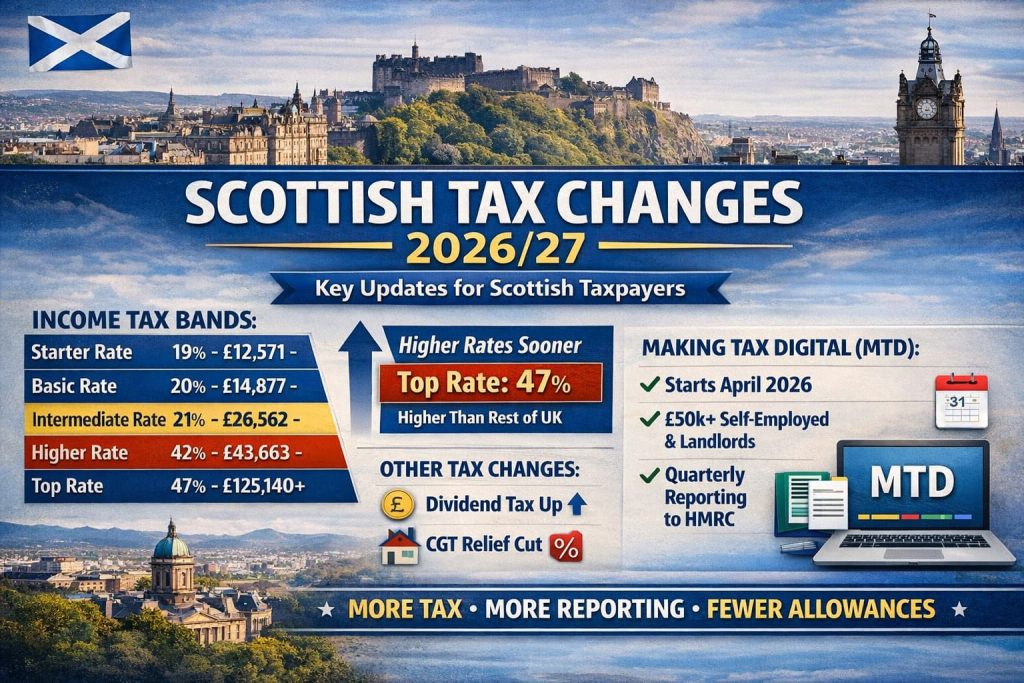
1. Income Tax Rates (Scotland 2026/27)
If you are a Scottish taxpayer, you pay Scottish Income Tax on earnings. Note that UK rates still apply to savings and dividends — Scotland has more tax bands and higher top rates than the rest of the UK.
Personal Allowance
- £12,570 tax-free
- Reduced if income exceeds £100,000
- Fully removed at £125,140
Scottish Income Tax Bands 2026/27
| Band | Rate | Income Range |
|---|---|---|
| Personal allowance | 0% | £0 – £12,570 |
| Starter rate | 19% | £12,571 – £16,537 |
| Basic rate | 20% | £16,538 – £29,526 |
| Intermediate rate | 21% | £29,527 – £43,662 |
| Higher rate | 42% | £43,663 – £75,000 |
| Advanced rate | 45% | £75,001 – £125,140 |
| Top rate | 48% | £125,140+ |
Key differences vs the rest of the UK: Scottish taxpayers start paying tax slightly earlier, hit higher rates at lower income levels, and face a top rate of 48% compared to 45% in England, Wales and Northern Ireland — with an extra Advanced rate band charging 45% on income between £75,000 and £125,140, a band that doesn’t exist anywhere else in the UK.
⚠️ Most thresholds remain frozen, meaning more of your income is taxed at higher rates over time — a stealth tax increase affecting Scottish earners disproportionately.
2. Other Personal Tax Changes (UK-Wide)
Dividend Tax
- Basic rate: 8.75%
- Higher rate: 33.75%
- Additional rate: 39.35%
- Dividend allowance: £500
Capital Gains Tax (CGT)
- Business Asset Disposal Relief: 18% from April 2026
- Annual exempt amount: £3,000
3. Making Tax Digital (MTD) — Now Live
From 6 April 2026, Making Tax Digital for Income Tax applies to self-employed individuals and landlords with income over £50,000. This applies equally in Scotland — it is administered by HMRC, not the Scottish Government.
Under MTD you must keep digital records, submit quarterly updates, and file a final annual declaration. The threshold drops to £30,000 in April 2027 and is expected to reach £20,000 by 2028.
👉 Read our full MTD guide to find out how to prepare.
4. Self Assessment — Still Required
Even under MTD, the annual Self Assessment process continues. Key deadlines remain:
- 31 October — paper return deadline
- 31 January — online return and tax payment deadline
5. What This Means in Practice
If you live and work in Scotland, you will generally pay more income tax than equivalent earners elsewhere in the UK — particularly if you earn above £43,000 where the higher rate kicks in earlier. Combined with frozen thresholds, the effective tax burden on Scottish taxpayers has increased significantly in recent years.
Good tax planning — and keeping accurate, up-to-date records — is more important than ever.
Need Help With Your Tax?
At PBAS, we help sole traders, landlords, and self-employed professionals across Scotland manage their tax obligations efficiently and accurately. Whether it’s Self Assessment, MTD compliance, or general bookkeeping, we’re here to help.
This article provides general guidance only. For specific advice on your circumstances, consult HMRC directly via the Scottish Government income tax page or speak to a qualified bookkeeper.

About the author
James leads Premier Bookkeeping and Accountancy, helping sole traders and landlords across Wallyford, Musselburgh, East Lothian, Edinburgh and the rest of Scotland stay on top of their bookkeeping and Making Tax Digital obligations. He writes practical, plain-English guidance based on the questions clients bring to the practice day to day.